Sometimes digging into new cultures and places is the best thing to refresh my mind!
In this case, we decided to travel to Lisbon since so many people are so fond of the city on the hills! Therefore Lisbon was on our list for a while!
No more excuses, let’s go! Usually, we don’t book packaged tours. But due to the current inflation, it was much cheaper to do so this time. Even though I try to avoid this it was the most economical choice. It’s worth double-checking prices for this kind of journey and the separate parts like accommodation, tours, transfers, flights, or train tickets.
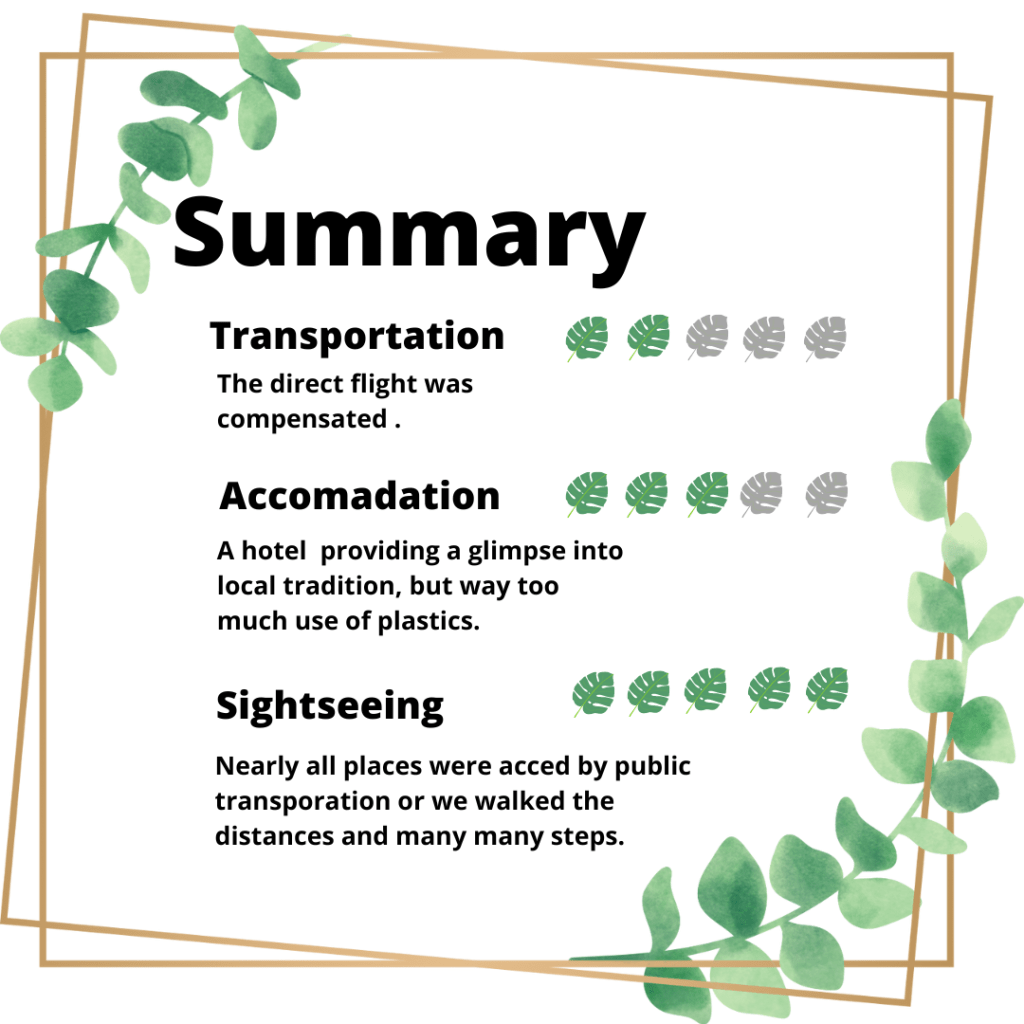
Due to a matter of fact that we traveled via airplane we compensated for the CO2 footprint we were causing! The target conflict between taking a train and a flight was very tough with regards to the time. Therefore, we chose against a train journey.
September was the month that we expected to be off-season! What a disbelief! The city was crowded, especially with cruise line tourists. Once more I realized what this might mean to all those who live and work in Lisbon! Public transportation was full of people. Some visitors didn’t even make a place for elderly people who needed a chance to rest their tired bones and catch a breath. Even though we want to relax and have a good time during our holidays, let’s not forget that everywhere we go we are guests! That’s why most of the time I didn’t sit while using public transportation being aware and considerate of the people who live there!
But, during every journey, I learn and adapt, and yes, even though Lisbon is popular: I have some nice advice to share 🙂
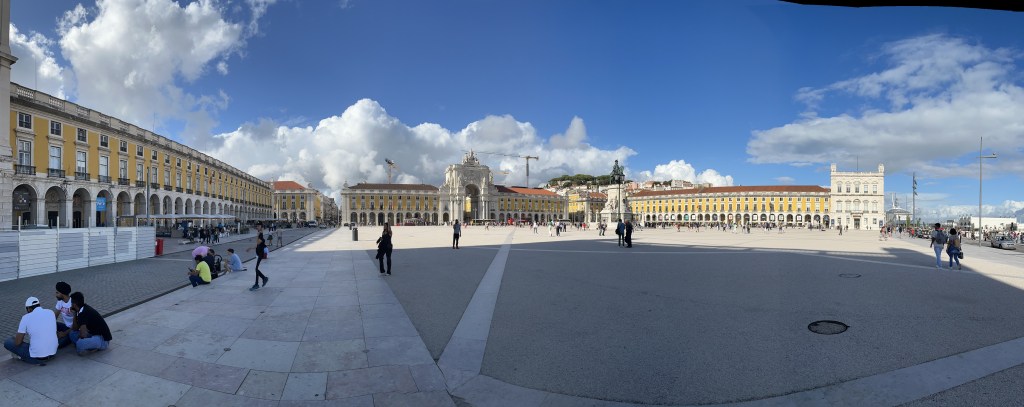
The city is built on hills and there are some ways we explored the city while avoiding the crowds!
The best and cheapest way to use public transportation is to buy the Lisboa Card. It includes the metro, elevators, discounts on the most popular sites, and even some free entries like the Torre Belém.
We realized quite fast that the famous elevators like “Elevador de Santa Justa” are very crowded if you want to go up to the Chiado district. We figured out how to avoid most of the crowds! But beware, it takes you up first 😉
We went by foot to Chiado which takes some time, but most of the tourists are too lazy to do so, therefore, you can avoid masses of tourists. Strolling all along the streets discovering some more lovely cafés and shops you might miss if you follow the main paths! We visited the famous Convento de Carmo where thoughts fly high. The former monastery and church lost its rooftop during a massive earthquake. The atmosphere is very unique: my thoughts were free and flew in the open air which gave me the chilling feeling to be connected to a wonderful place called Earth.
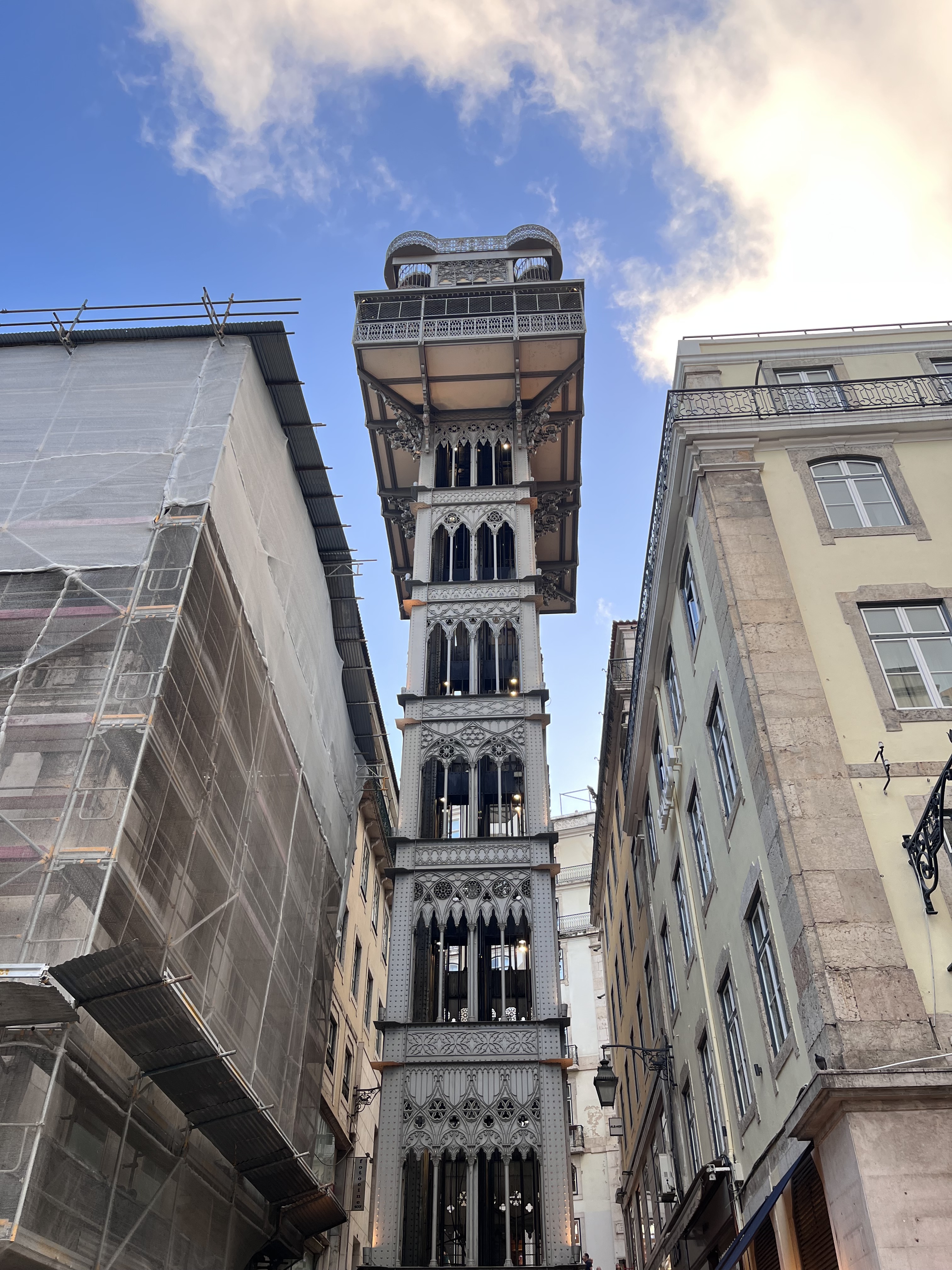
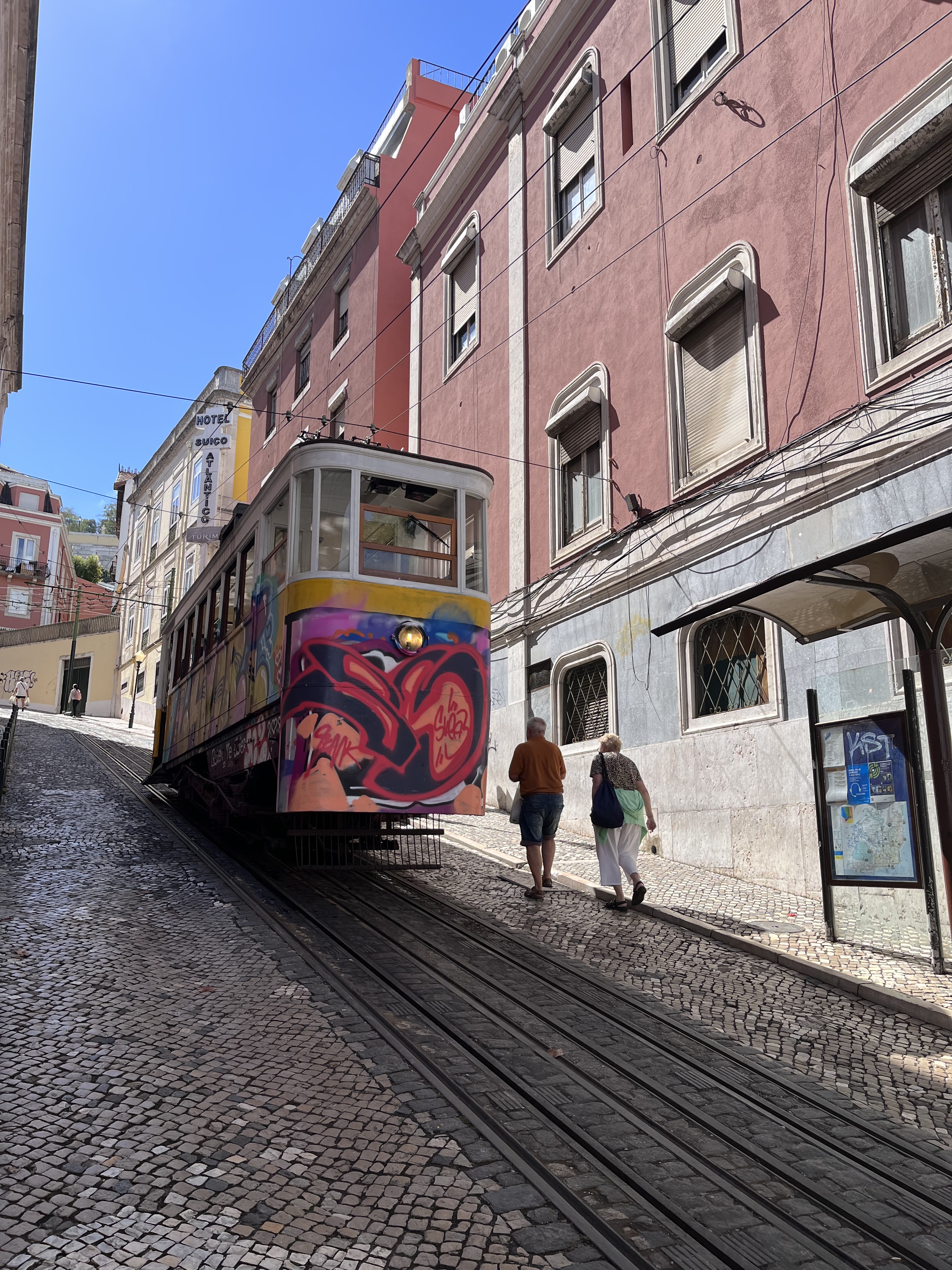
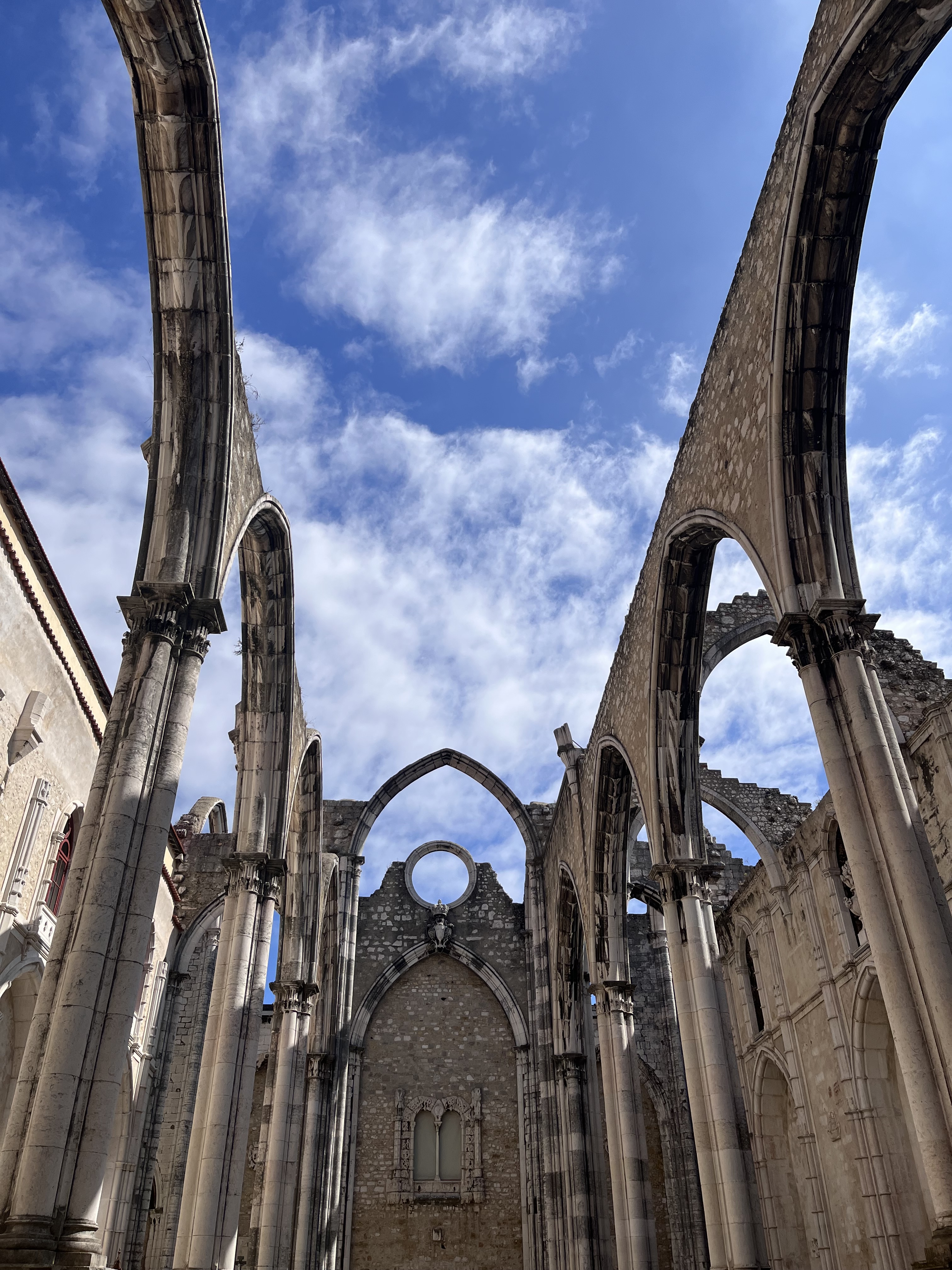
Timing is also something to check upon visiting certain sites! As for the elevators, I can advise you to use them in the opposite direction in the late afternoon or early evening: from Chiado down to Baixa! Most people go up and therefore they wait at the bottom of it! This works for most of the elevators and cable cars.
We went through so many districts of this wonderful city that it is hard to describe them all. First of all, let’s take a look at some of the most famous places 🙂
Torre Belém and Mosteiro dos Jerónimos are outside the city center in the Belém district. We reached it via Tram 15 E (Cais Sodré to Lg. Princesa) otherwise Google Maps will be your best friend for orientation 🙂 When we passed the Mosteiro dos Jerónimos which is a deep dive into European and architectural history. It was crowded around 10:30 am, so I advise you to go later in the afternoon. The queue populated by overwhelming many cruise line tourists was long!
We decided to start first with Torre Belém which is an outstanding tower, a former fort, and nowadays a World Cultural Heritage site. The steps are narrow and it will take you some time to take a look since you can only head in one direction to the spacious chambers and light-flooded balconies.
Afterward, we checked the situation at the monastery again and it was still full of people.
Very close by is a huge cultural center which looked quite interesting and offers some less crowded spaces including a small garden with pieces of art. It’s accessible via the main street and caught our attention due to the sheer size and because it looked very interesting. We went into the inner courtyard and discovered a lovely green wall and access to a café-restaurant “Eeste Oste” where we took a small break. Watching the lush greenery and the Tejo with a cold drink outside the terrace was the right thing to do before we jumped back to the crowds 🙂 The time was right and the row not even half of the people were left since our last check at the Mosteiro had dos Jerónimos which is the second World Cultural Heritage. The entrance is included in your Lisbon card. I was impressed by the beautiful artisanal work, the different forms, and the fantastic creatures which guarded the monastery. Directly next to it, we could pay a visit to Vasco da Gama’s grave hoping to get inspired by the world-famous adventurer and traveller.
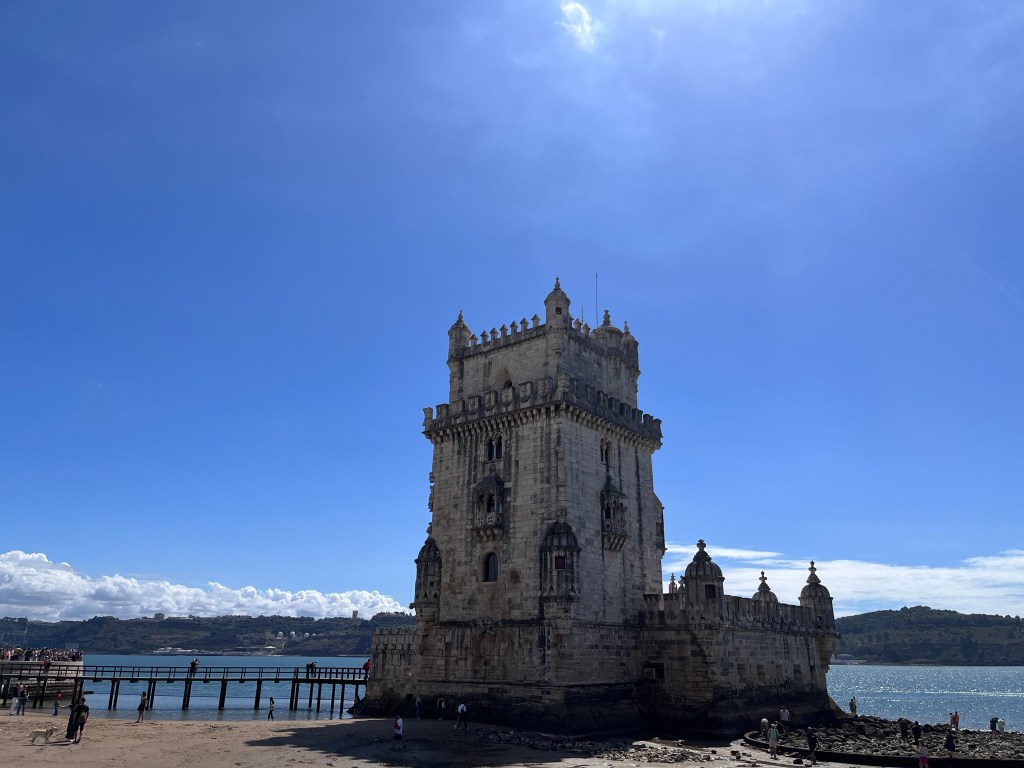
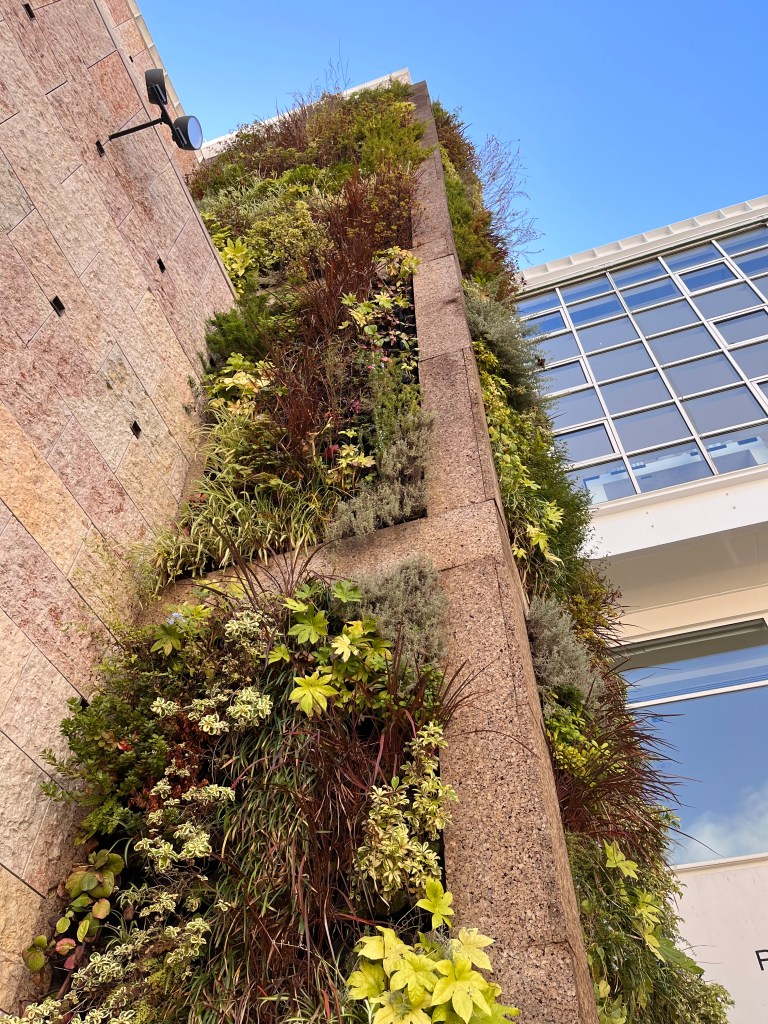
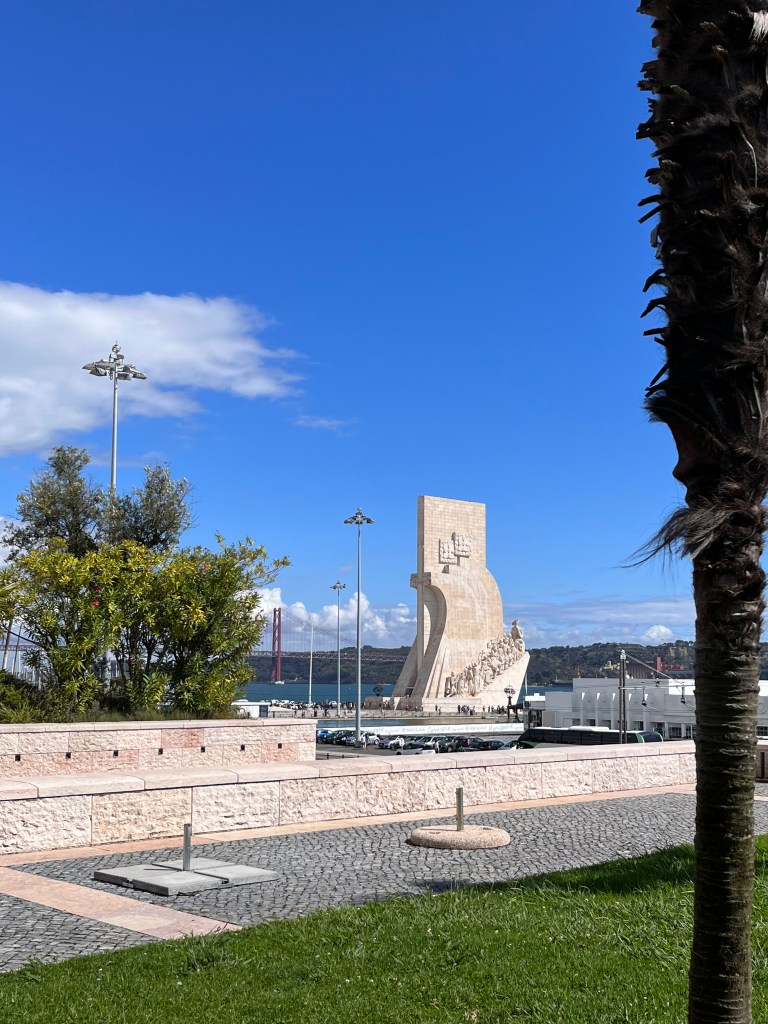
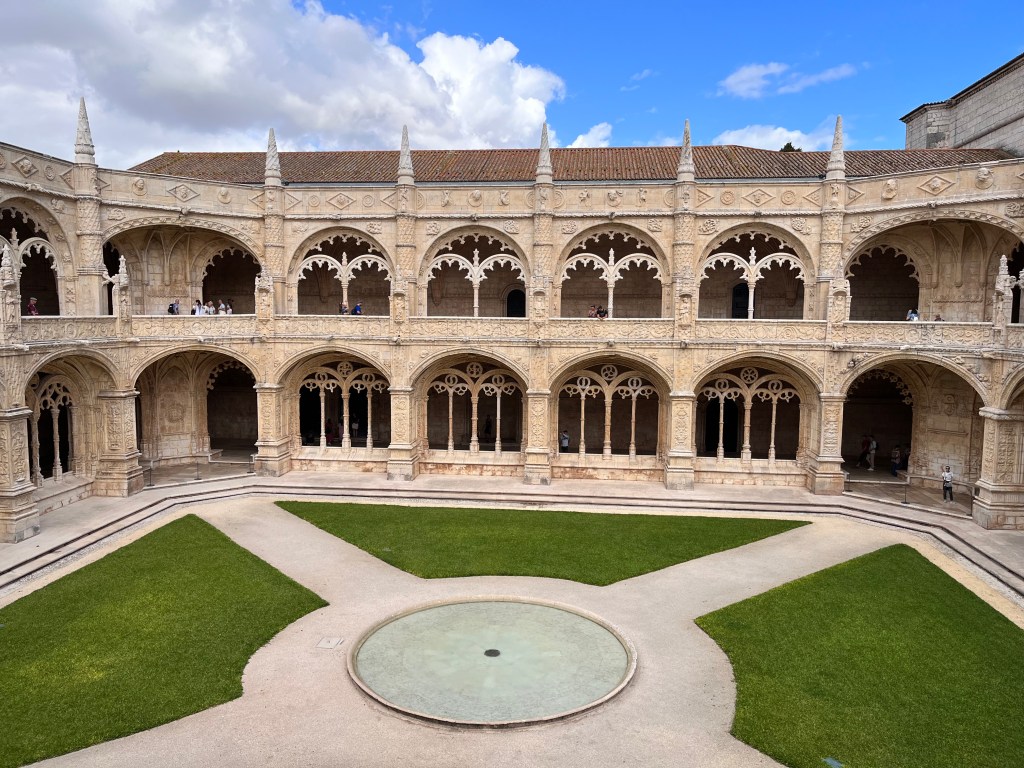
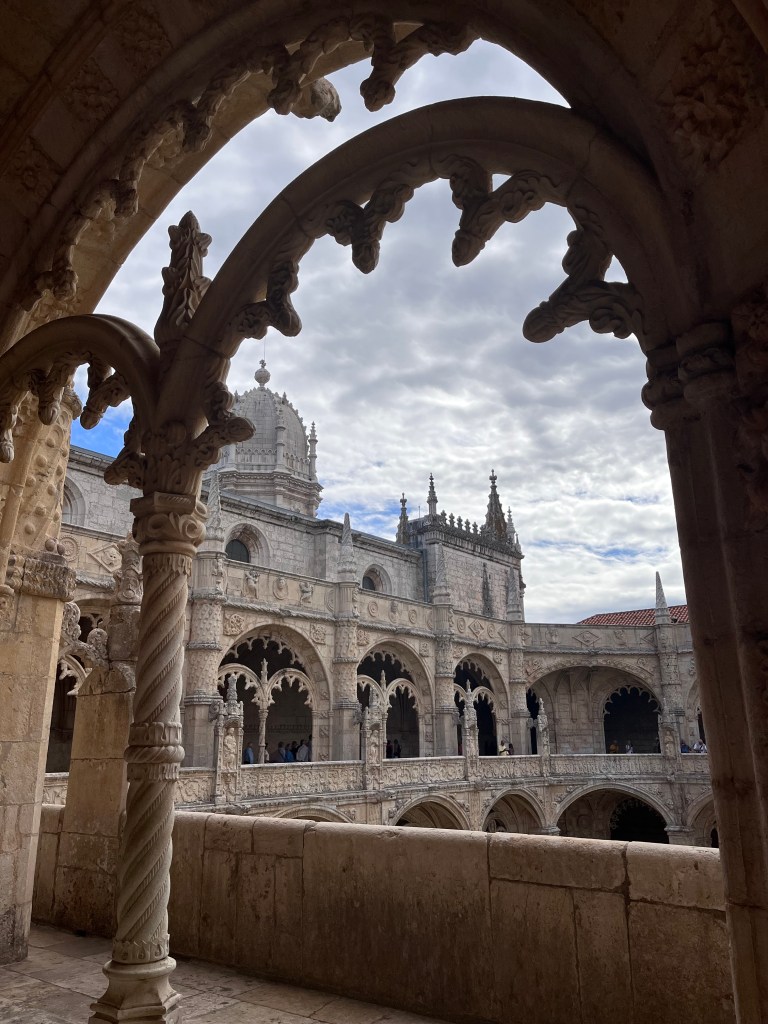
Ok, so much information and a journey to the past that we needed a little snack and one of the most popular and famous for Lisbon are pasteis de nata! Pasteis de Belém is a well-known pastry shop and indeed delicious! The only disadvantage is that many many tourists go there and due to the close location to the monastery it’s always completely crowded! BUT, I wouldn’t be a pro traveler if I couldn’t offer you a solution 🙂
We followed the street to another pasteis café which seemed a bit quieter without a huge row outside the shop: Manteigathia – Fábrica de Pastéis de Nata. I loved the taste and it was similar to the before mentioned shop. The little difference and why it matched my taste was the little something pinch of cinnamon to give it some spice and warmth!
I won’t take you to all the places we visited otherwise this article will be way too long, but I’d like to give you some of my favorite spots and recommendations to have an urban and less touristy experience with the sense to be a bit more conscious. The two museums we visited were the Museum do Oriente and the Museu Nacional do Azulejo. The first one provided us with a sense of the colonial past of Portugal around the globe and a sensitivity to all those cultures the explorers encountered. Across the city and in the second museum we saw the azulejos: multi-colored artisanal craftsmanship which originated in Islamic culture learning about their history and the way to modern art!
In terms of local food I decided not to give any special advice or name any restaurants we came across, but to share some learnings:
- Go with local food, if you eat fish try the famous: Bacalhau! If you come across the fish pudding, please give me a shout-out, because I didn’t find it anywhere!
- Go off the beaten track and check those restaurants with a queue Pardon? Yes, check out those restaurants which are crowded. They are an indicator that the food is fantastic and you just need to be a bit patient while the waiter will put you on a list!
A funny side story is that due to a pang of overcoming hunger, we went to an empty restaurant because we wanted to save some time…it was the worst food during the whole journey. And yet we knew it better! Even though some of the good restaurants have great food and a fantastic ambiance you might encounter some cockroaches which love the climate. Make sure your partner in crime and savior is next to you 🙂
In terms of the weather, I had my personal down when I realized that I was close to a heat stroke. I couldn’t eat for half a day and was too tired to leave the hotel. It could have been worse and I was lucky that I recharged fast, but I lost half a day due to recovering.
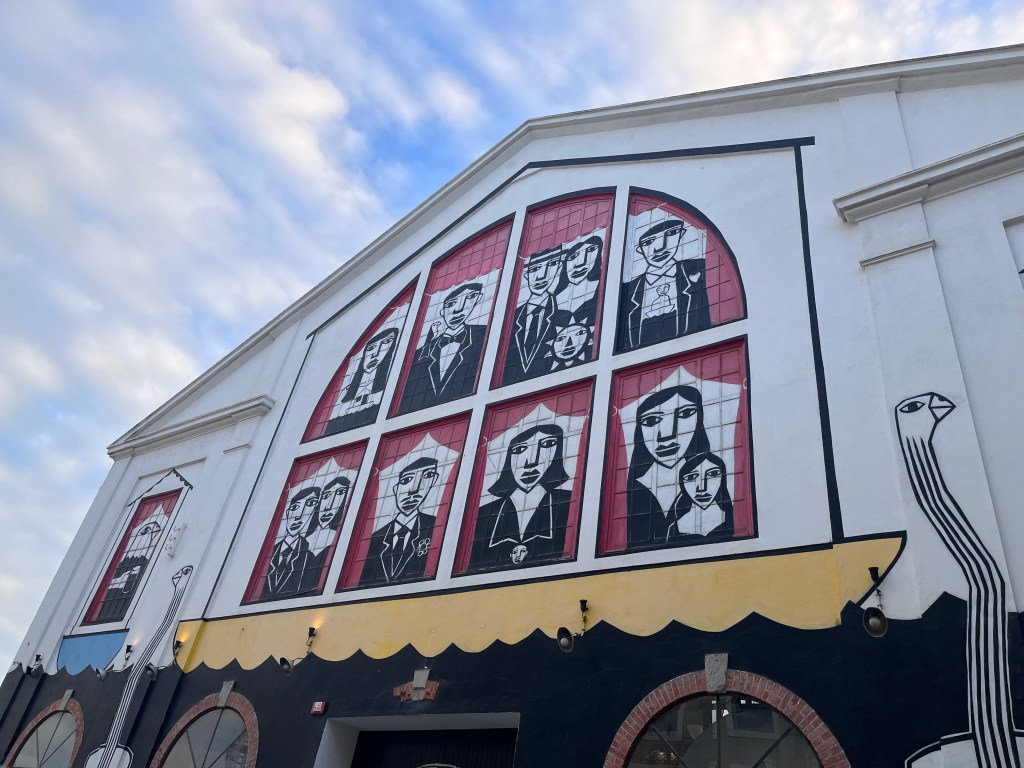
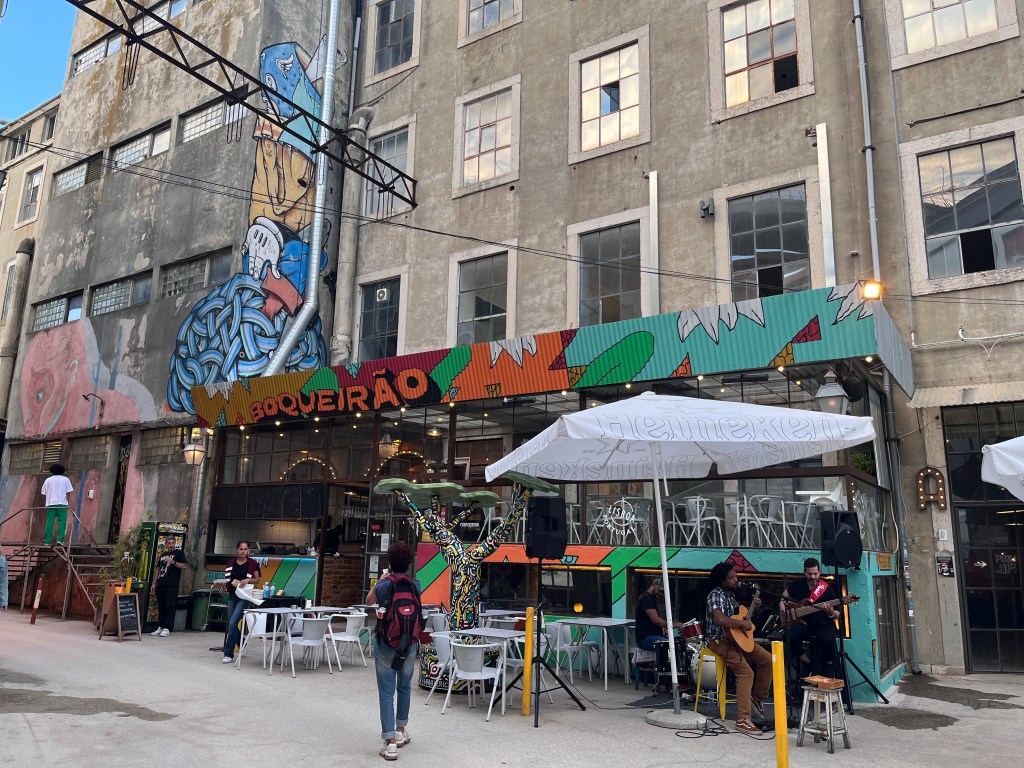
There were some spots we enjoyed in terms of sustainability and urbanism. One of them is LX Factory. It’s not a quiet place and is already full of people. But still, I loved it since it offers restaurants for all tastes, beautiful street art across the area, and some nice and alternative shops. In the evening there’s live music in one or the other restaurant and the atmosphere is a mix of local lifestyle, young hipsters, tourists, and artists.
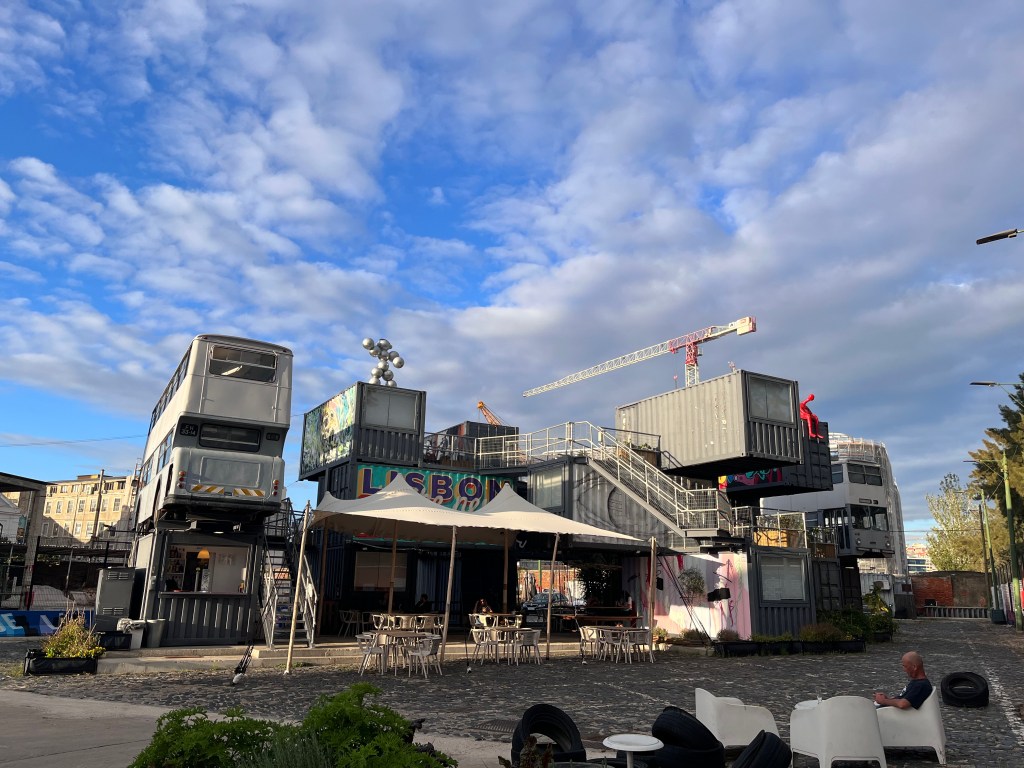
If this is not that interesting around the area are other nice places amid a huge construction site. Via a short distance walk in the direction of the Tejo River, we discovered the Village Underground Lisboa. It’s much smaller and has an atmosphere of creativity, and style, and seems to be a place for people who drive innovation! I enjoyed the less messed-up atmosphere and the restaurant during a cold beverage!
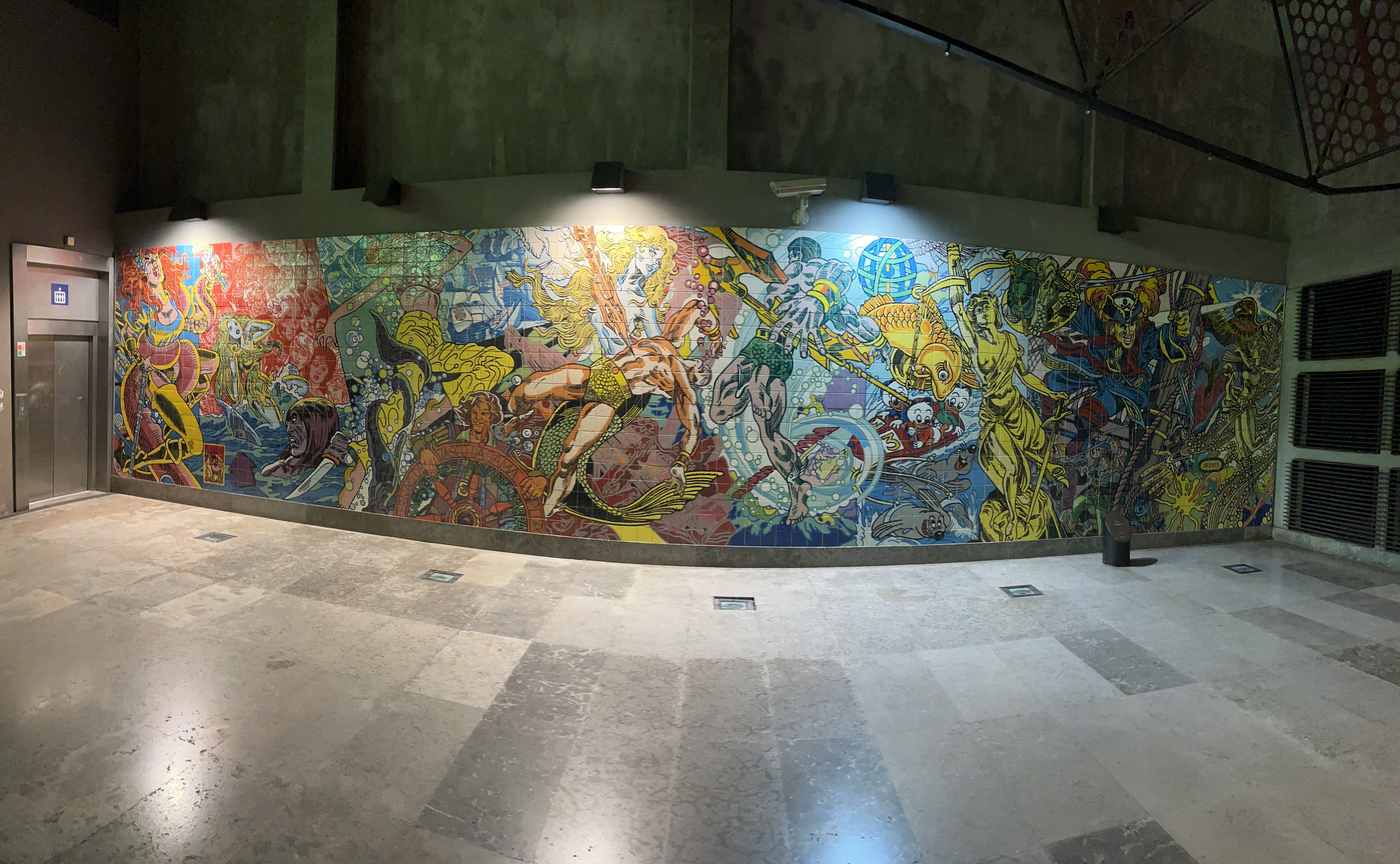
It might seem unusual, but seeing the huge Oceanário de Lisboa in the district of Parque das Nações looks out of place. The metro station which took us to the area already offered lovely artwork and once we crossed the huge mall the area provides a wonderful promenade and public art. The huge aquarium didn’t seem to be a sustainable place at first glance. It revealed itself to be at least very conscious about informing in terms of the different species which live there and the level of danger they are facing in wild nature. Art exhibitions made out of recycled trash raise indeed more awareness of how we should cope with nature and the sustainable ocean shop gave me a feeling that they care about the maritime environment. I loved this place because it showcased the vulnerability of the oceans but also provided small steps to a personal solution with the products they offered (plastic-free cleaning products, vegan & organic closing, etc.).
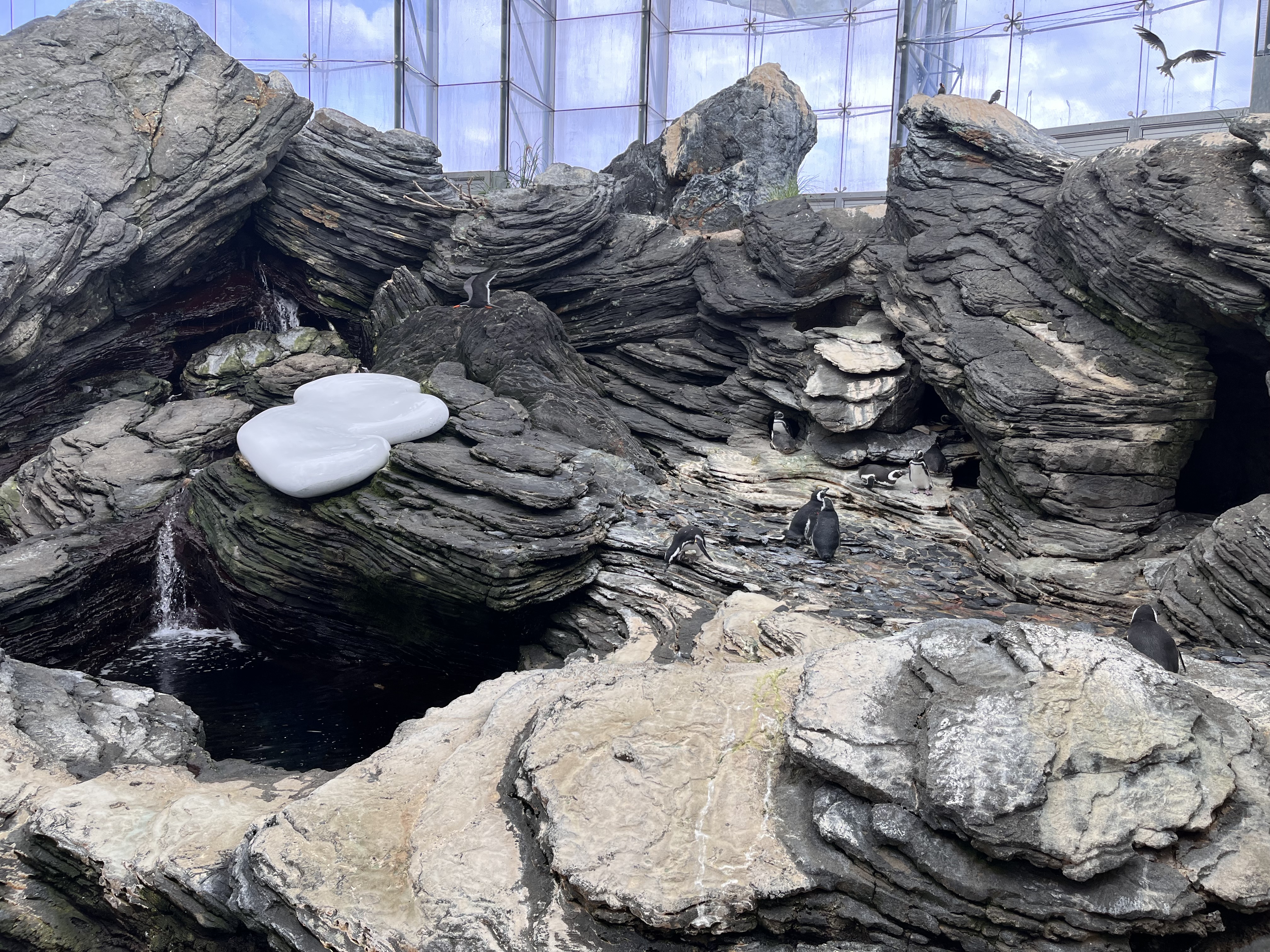
A place we didn’t want to miss is this craft beer brewery which of course offers some non-alcoholic drinks called Dois Corvos Marvila Taproom. We visited it on our return to the city center once we came back from our ocean dive. It’s outside the historical city, in a peaceful street where we relaxed for a while and where local people love to hang out, too.
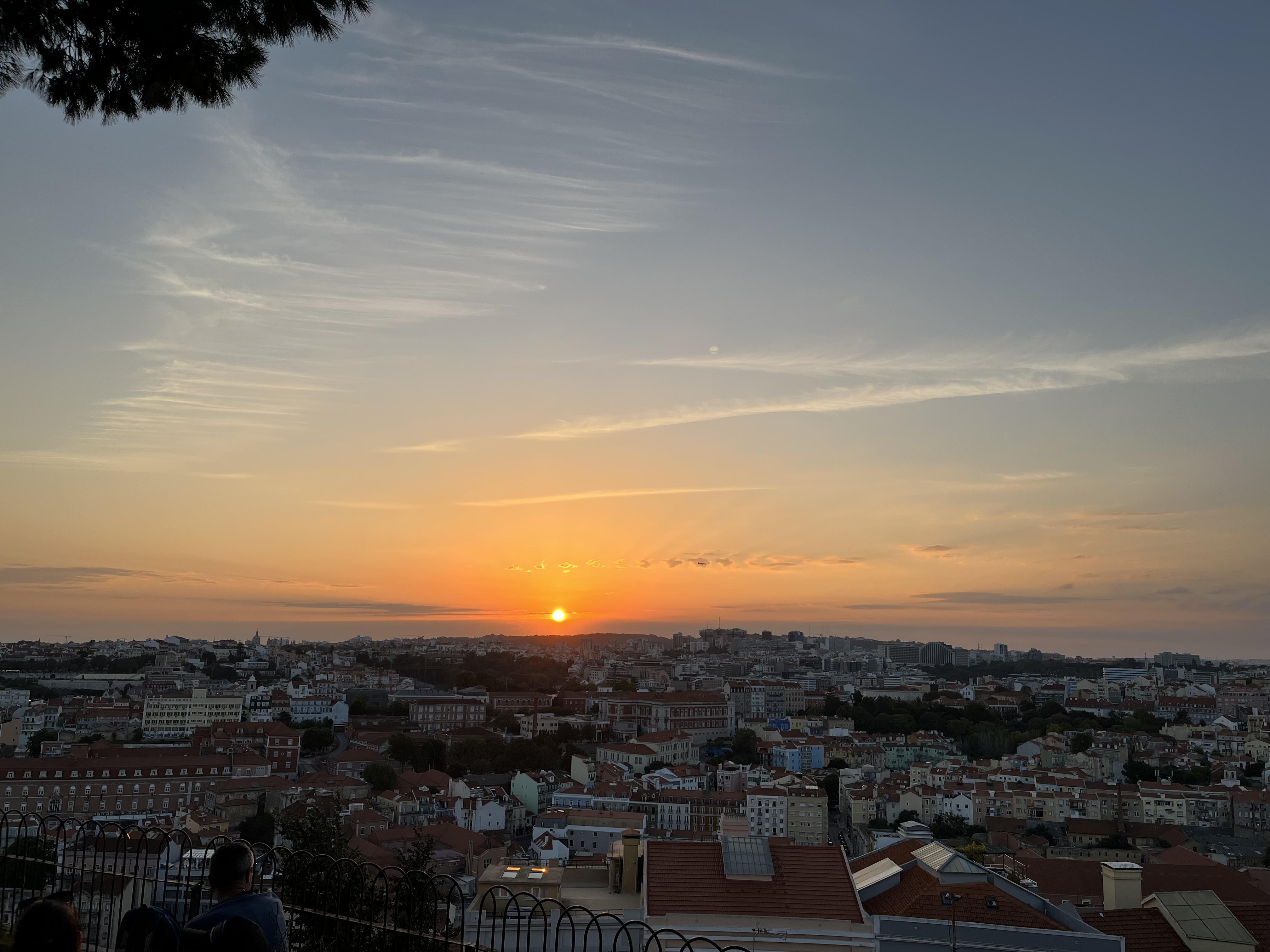
Lisbon offers so many parks and famous viewpoints that a recommendation is hard to make for me. The best thing we did was just to go with the flow where fewer tourists could be found.
To take a small break from city life and of course to see the ocean, we decided to pay a visit to Sintra. Including a ride with the historical cable car, we got some fresh wind around one’s nose and listened to the ocean waves.
Our hotel was close to the greenest boulevard I ever saw: Liberdade Boulevard.
The hotel Portobay Liberdade provided a local and delicious breakfast, even local music which we missed out on one evening, and the building itself fit perfectly into the local architecture. The hotel was green key certified which is ok, but a standard nowadays. The part that worried me a bit was the huge amount of waste we produced with the amenities like tea or coffee in our hotel room. My suggestion would be a premium and sustainable instant coffee and tea leaves instead a coffee machine that needs aluminium capsules or even biodegradable ones.
Review:
I love the people who are always friendly, caring, and helpful and, who offered support when I got sick and coughed without stopping!
Hope to come back learn more about this unique city and at least dig into some Fado music!
[No paid ads]
 Conscious Travelista