
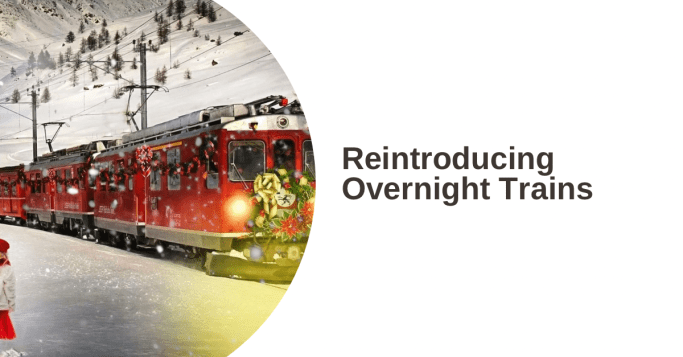
It’s time for some new inspiration! Since December is a time where some of us are going home to celebrate Christmas or just have a cozy holiday season with their loved ones. Did you ever think about using an overnight train instead of booking a flight? Get inspired by Gergely who is a dear friend from AIESEC providing you with ideas and some facts, too!
Traveling by air is significantly increasing our ecological footprint. Moreover, Europe is relatively small, you spend more time in the terminal than on the plane. For sure, it is faster, and there are low-cost options, which work well for short distances, however, I doubt that you would go for a long-haul flight on a no-frills airline. When the length is over 10 hours by plane, you have to stay hydrated, and you can only get food on a full-service airline. Some airlines have good food on board with comfy seats. But let’s turn back to trains, more specifically the overnight trains of Europe in various countries. What if you travel at night? What happens is that at night, you are sleeping and waking up in a new country. Therefore you won a whole day at your destination. I think it is a very sustainable way of traveling, especially if you have a dense rail network. If it is electrified, it is even better. Electrification has a longer story than you would expect, attempts have been made as early as the 1900s. What country made tons of efforts to do so? It was Hungary! At that time, Hungary knew that electrification was the future of rail transport. I am Hungarian myself, so I do not know why we aren’t the leaders of electrified tracks. We had a fantastic engineer, called Kálmán Kandó, who invented the electric locomotive and introduced the idea of electrification in Italy. Experiments for increasing the speed were carried out and by the ideas of Kandó, the 25 kV 50 Hz AC (twenty-five kilovolts, fifty Hertz alternate current) have become the standard (for high-speed rails mostly). The first line to be electrified like this was the Budapest-Vienna railroad on the Hungarian side in the early 1930s. This was nearly destroyed in the World War. I know it is expensive to electrify and sometimes the terrain does not make it feasible (like the rocky Dinarides in Croatia).
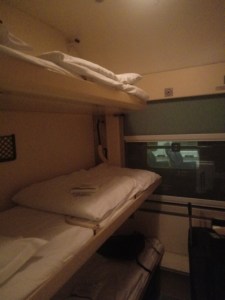
Figure 1: My PKP, Sleeping compartment between Budapest and Warsaw
Overnight trains are also cost-effective because you have a reservation included in the ticket price. National rail companies also reintroduced such services to nearby large cities. Let’s start with Hungary, from where you can get to Berlin, Zürich and Stuttgart (via Munich) with an overnight carriage operated by the Hungarian State Railways. The compartments are cozy and you can opt for one for yourself for the whole journey. If you are lucky, nobody comes into your compartment. Sometimes you even get breakfast when you wake up. Therefore you saved one night in a hotel. Here I have a personal case. Every month, I am taking the train to Warsaw. This has proven to be very convenient because the train stops right behind the hotel I am normally staying at. I just get off, exit the station, walk for a few minutes and there I am. The workplace is not far from this place either, just 15 minutes by foot. So it is even better to travel here by train, because had I taken the plane, I would have been forced to go by bus to the city center, then change to another bus or tram to finally get to my hotel. For traveling to Poland, I am using the sleeper cars provided by the Polish State Railways. Moreover, these trains leave from the city center and arrive there as well. My train departs from Budapest-Nyugati (Western) or Keleti (Eastern) station, both situated a few minutes from the center. The train’s destination is Warsaw-Centralna (Central), which is right in the downtown. Before boarding, the attendant asks me what I want: coffee or tea. A biscuit for a sweet breakfast is provided in the compartment.
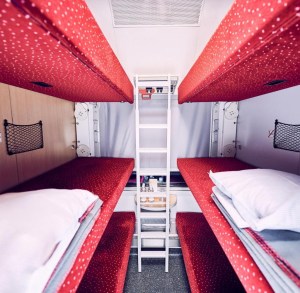
Figure 2: Inside an ÖBB Nightjet couchette
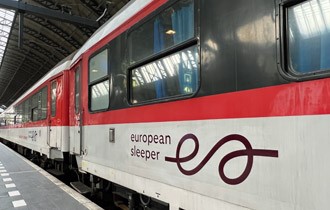
Figure 3: A new, European Sleeper train outside
Turning back to the issue of overnight trains: these have been immensely popular since the introduction of traveling by rail. Before the introduction of low-cost airlines, it was normal to cover longer distances by rail. Hence, overnight trains were also popular, sometimes even covering distances as large as between Budapest and Paris. This service was in operation until 2001. Then it was discontinued. Long-distance night trains were reintroduced in 2017, in Austria, when their operator ÖBB introduced NightJet. This provided a new link to the nearby larger cities. Of course, COVID put a very long halt to this type of service as almost no international travel became possible. When this was lifted in late 2021, new routes (including Paris and Brussels) were added to the pallet. The loosening of bars opened new routes to other providers. Like European Sleeper, which is a relatively new company, operated in Belgium and the Netherlands. Currently, they only run one route three times a week: Berlin to Brussels via Amsterdam. Next year, they are planning to add Dresden and Prague to their network. Hence it becomes possible to reach Brussels from Prague without having to change trains anywhere. Hopefully, they can fulfill this ambition. By 2025, they would like to reach Barcelona from the Dutch capital. It is worth noting here that Spain uses a different gauge than the rest of Europe. The rest of Europe uses the standard gauge (1435 millimeters), while Spain uses the Iberian one (1668 millimeters). However, there used to be another service, called Trenhotel Joan Miró, between Paris and Barcelona and that was on standard gauge. However, it was discontinued in 2020, due to the pandemic. Even before the pandemic, the sole French destination was the border crossing between Spain and France, namely Hendaye. Making this connection possible would be crucial to reconnecting Spain with international train traffic. These new services and the reintroduction of some older overnight services can make the way towards sustainable traveling. We have seen: that the introduction of Nightjet provided a good connection to further destinations in the morning, for example Budapest. Budapest is accessible from Vienna within 3 hours by train. Most services are done with Railjet, but there are some others as well. This is what I used during my trip to ERAC (European Regional Alumni Conference, which is an annual conference organized by AIESEC[1]) this year. I took the train from Budapest to Vienna by the EuroCity (not Railjet), then Vienna to Milan by Nightjet, and from Milan to Naples by the high-speed railway through the wondrous Emilia-Romagna, Tuscany, Lazio and Campania. On the way back, I took the high-speed rail to Rome, then to Vienna by Nightjet, then to Budapest by Railjet. Railjet is a fast service providing good connections between Budapest, Vienna, and Munich.
All in all, the reintroduction of overnight trains all around Europe is an excellent step towards green travel and reducing the ecological footprint. Nowadays if you buy a train ticket, they indicate how much carbon dioxide is emitted when you choose planes, cars, and trains. Train wins by a big margin. Especially when it is an electric train. Let’s see it in the below chart examining three routes!
| Route | Car | Plane | Train |
| Warsaw-Sopot | 34.6 kilograms | 82.7 kilograms | 9.5 kilograms |
| Budapest-Warsaw | 62.75 kilograms | 150 kilograms | 17.24 kilograms |
| Budapest-Naples | 125.52 kilograms | 300 kilograms | 34.48 kilograms |
Austria also largely electrified their network. They know what the future is. Electric trains, high speeds and comfort for passengers allow them to travel in their sleep for a reasonable price. Often these are a fraction of the airlines, even the low-cost airlines. Moreover, France banned flights between cities which can be reached within two and a half hours. Have you ever heard of banning the trains? Trains have to function all day long, all year long. In many European cities, planes are forbidden to land between 11 PM and 5 AM to allow locals to sleep. You cannot do it with trains. They will go to stations even at midnight.
[1] AIESEC is the world’s largest student’s organization, founded in 1948, present in 110 countries. The term “alumni” refers to members who were involved in this organization in their active years.
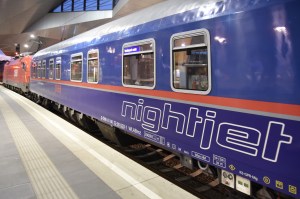
Figure 4: A Nightjet train from the outside
Source:
- Railjet: https://www.oebb.at/en/reiseplanung-services/im-zug/unsere-zuege/railjet
- Nightjet: https://www.nightjet.com/en/#/home
- Night time flight bans: https://www.uecna.eu/night-flight-bans-or-restrictions-at-european-airports/
- European Sleeper: https://www.europeansleeper.eu/en
- Stahl, A. (2018, January 18). Bei Vollmond nach Rom – Reise mit dem Nachtzug. Welt.de. Retrieved August 27, 2023, from https://www.welt.de/reise/nah/article172544742/Nightjet-Muenchen-Rom-Lohnt-sich-die-Fahrt-im-Nachtzug.html
 Conscious Travelista